
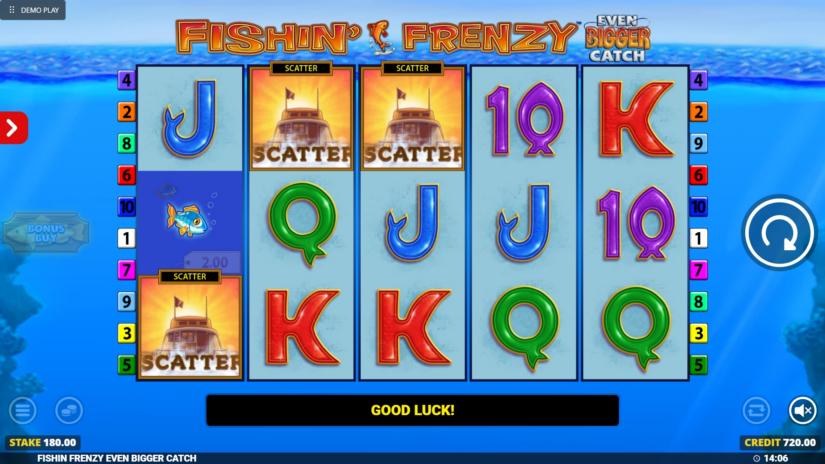
In our hectic digital world, we often pursue contrasting escapes: serene meditation for inner calm and thrilling slot games for quick excitement https://playtocasino.com/games/fishin-frenzy-big-catch-slot-demo/. Yet, the shift between these states doesn’t have to be disruptive. We examine the concept of mindful gaming, using the popular Fishin Frenzy Slot as a case study. This approach enables players to interact with the game’s aquatic theme and simple mechanics in a more aware, controlled manner, possibly enhancing enjoyment while keeping a balanced perspective on play, particularly within the UK’s vibrant online gaming landscape where responsible engagement is essential.
Mindful Gaming in the UK Context
In the United Kingdom, where gambling is a controlled form of entertainment, conscious play complements the national emphasis on player protection and safe play. The UK Gambling Commission requires tools like awareness prompts and financial boundaries. We view conscious habits as a internal, private complement to these outside protections. By cultivating awareness, UK players can engage with popular titles like Fishin Frenzy more safely, ensuring gaming stays a leisure activity that does not harm other areas of life.
FAQ
What is mindful gaming?
Conscious gaming is the approach of engaging with complete, present-moment awareness. It encompasses observing the game’s visuals, sound effects, and mechanics, as well as your own mental notes and emotions, without judgment or automatic reflex. The aim is to savor the experience consciously, preserving command and viewpoint, rather than gaming on automatic mode driven exclusively by the desire to triumph.
Can you play slots like Fishin Frenzy really be mindful?
Certainly, any pursuit can be handled attentively. The peaceful atmosphere of Fishin Frenzy creates a conducive environment. By focusing on the perceptual elements—the sea, the sounds, the animation—and setting clear intentions for your playtime, you can convert slot play into a practice of focused focus and managed engagement, rather than a inactive or reactive hobby.
How can I transition from mindfulness practice to launching a game?
Carry the calm, watchful state from your mindfulness session into the game. After sitting in stillness, draw a few breaths before starting. Begin by simply watching the game’s loading screen and opening sounds without right away starting. Define a straightforward intention for your session. This bridges the two experiences, permitting the conscious condition to remain into your gaming activity.
What if I get too worked up or irritated during play?
Emotions are normal. Mindfulness is about observing them without being dominated by them. When you detect strong enthusiasm or annoyance, take a break for a moment. Accept the emotion, take a deep inhalation, and reconnect with your pre-set goal or the sensory elements of the game. This small gap allows you to choose your next action deliberately.
Will mindful gaming diminish the risk of harmful play?
While not a remedy, it is a potent preventive tool. By fostering self-awareness, it helps you recognize early warnings of recovering losses or playing beyond thresholds. The habit of establishing intentions, monitoring triggers, and maintaining present-moment focus encourages a more structured and intentional interaction with gaming, organically promoting healthier behaviors.
Do I only play the demo version for mindfulness?
Commencing with the demo version is highly suggested for practice. It eliminates financial strain, allowing you to concentrate purely on cultivating mindful attention. Once the approach feels instinctive, you can use it to any format of play, as the core competence is internal perception, not the external bet.
For how long should a mindful gaming session last?
Duration is less critical than the quality of focus. We suggest short, focused sessions of 10-20 minutes when beginning. Use an external timer. The key is to maintain mindful awareness throughout. A short, conscious session is far more valuable for developing the practice than a long, automatic one.
Defining Intentions Prior to You Start
Defining goals is the cornerstone of mindful gaming. Ahead of loading Fishin Frenzy, we intentionally set the parameters of our play. This is not about demanding a win but about shaping our interaction. An goal could be to appreciate the ocean graphics for 15 minutes, to watch the frequency of bonus features, or just to cultivate staying focused during losses. Writing this down or stating it in your mind structures the experience, making it far more manageable to identify when our attention has drifted into mindless, reflexive play.
The Function of Sound and Visuals in Mindfulness
Fishin Frenzy’s audiovisual design is a powerful tool for mindful practice. We can use the gentle bubbling sounds and the rhythmic casting of the fishing line as focal points, much like one uses the breath in meditation. When the mind becomes pulled away by anticipation, gently bringing attention back to these consistent sensory elements anchors us in the present moment. This changes the game from a potential source of tension into a dynamic object of meditation, where even the reel spins become a visual mantra.
Shifting from Meditation to Play
Shifting from a meditation session directly into gaming demands a bridging mindset. We suggest bringing the residual calm and focused attention into the game. Rather than rushing to spin, we can take a moment to soak up the game’s opening screen, take in the ambient music, and establish our intention. This conscious transition assists preserve the mindful state. Regarding the first few spins as an extension of observation, rather than a pursuit of outcome, effortlessly merges relaxation with interactive entertainment.
Establishing a Well-rounded Gaming Session
A balanced session honors both the wish for enjoyment and the requirement for health. We structure this by implementing clear limits. A pre-session period of deep breathing creates the tone, while a post-session ritual, like stretching or recording three things seen in the game, helps compartmentalize the activity. Key components for balance are:
- Time Awareness:
- Financial Boundaries:
- Physical Check-ins:
Acknowledging and Handling Gaming Cues
Attentive awareness enables us identify personal cues that cause less controlled play. These may include the “near-miss” of a big symbol, a sequence of small payouts, or the conclusion of a bonus round. By detecting the physical feelings or ideas these events trigger—a accelerated pulse, a thought to “chase” shortfalls—we can stop. We can then select a conscious answer, like doing three deep breaths or resolving to cease after the next spin, thereby preserving agency over our gaming session.
Common Stimuli in Slot Play
Grasping common cues explains our behaviors. The auditory prompt of a victory, even a small one, can spark a dopamine effect that prompts continued gaming. The visual “stacking” of characters that almost create a row creates a powerful near-miss outcome. In Fishin Frenzy, the emergence of the fisherman or the free spins scatter can turn into a central element for excitement. Consciously noting these moments as mere game occurrences, not personal commands, is a key ability.
Game mechanics of Fishin Frenzy for Attentive Play
The game’s uncomplicated mechanics facilitate attentive engagement. With a standard 5×3 reel layout and transparent paytable, the cognitive load is minimal, allowing thinking space for mindfulness. The key features that can be noticed mindfully encompass:
- The Fisherman Wild:
- Free Spins Trigger:
- Catching Fish:
The Approach to Mindful Gaming
Mindful gaming represents the practice of bringing aware, non-judgmental awareness to the gaming experience. It entails acknowledging the game’s entertainment purpose without being dominated by autopilot reactions or strong emotional swings. This philosophy prompts us to notice the sensory details—the sound of reels, the visual animations—and our own responses to them. By doing so, we transform a potentially passive activity into a purposeful practice of presence, where the journey is important as much as the outcome, fostering a healthier digital lifestyle.
Fundamental Tenets of Playful Awareness
The core principles hinge on intentionality and observation. We establish a clear intention before playing, such as enjoying the theme for a set time. During play, we observe the game’s mechanics and our impulses without instant reaction. This builds a mental space between stimulus and response, allowing for more considered engagement. It is not about suppressing excitement but about experiencing it fully without letting it determine our state of mind or subsequent actions.
Contrast with Autopilot Play
Autopilot play is defined by repetitive, unconscious spinning, often driven by a desire to recoup losses or prolong a win streak. Mindful gaming directly challenges this by inserting moments of conscious choice. We recognize the urge to “spin again” quickly and can choose to pause instead. This shift from reaction to response is the essence of integrating mindfulness into an activity typically associated with high-speed, low-attention engagement.
Fishin Frenzy Title: An Entry to Serenity
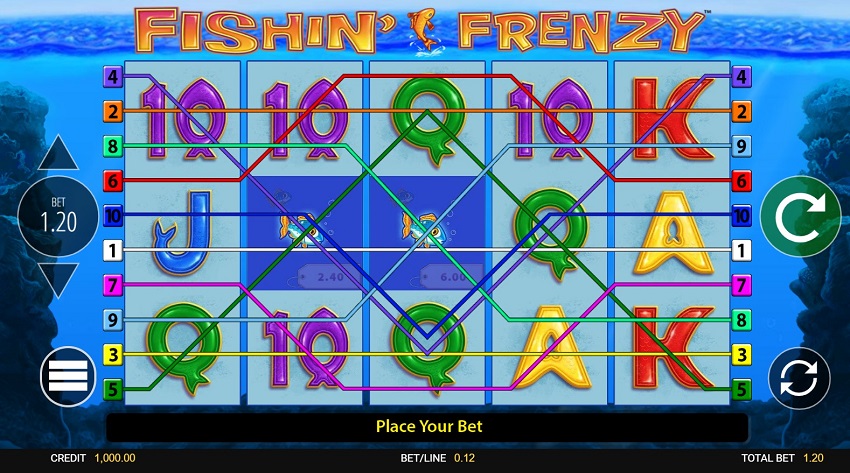
Fishin Frenzy, featuring its serene underwater theme, gentle blue color palette, and soft audio, provides a remarkably fitting backdrop for attentive play. In contrast to slots with intense audio and blinking lights, this game brings to mind the calm of a fishing trip. The central activity—catching fish for rewards—is fundamentally easy and cyclical, a quality that helps focus. We can employ these atmospheric elements as points for our attention, going back to the soothing visuals when the mind drifts to thoughts of wins or losses.